LUMBAR SPINAL STENOSIS · GREATER BOSTON
Lumbar Spinal Stenosis
When standing or walking becomes difficult, understanding why is the first step.
Lumbar spinal stenosis can make everyday activities — walking through the grocery store, standing in line, or spending time on your feet — increasingly uncomfortable. You may notice pain, numbness, tingling, or weakness in your legs that improves when you sit down or lean forward.
Dr. Gabriel Perrone is a fellowship-trained orthopedic spine surgeon helping patients throughout Greater Boston understand what's causing their symptoms and explore the full range of treatment options, from physical therapy and targeted injections to minimally invasive, endoscopic, or traditional surgery when appropriate.
The goal isn't simply to treat what appears on an MRI. It's to understand what's affecting you and choose a treatment that makes sense for your life.
What is lumbar spinal stenosis?
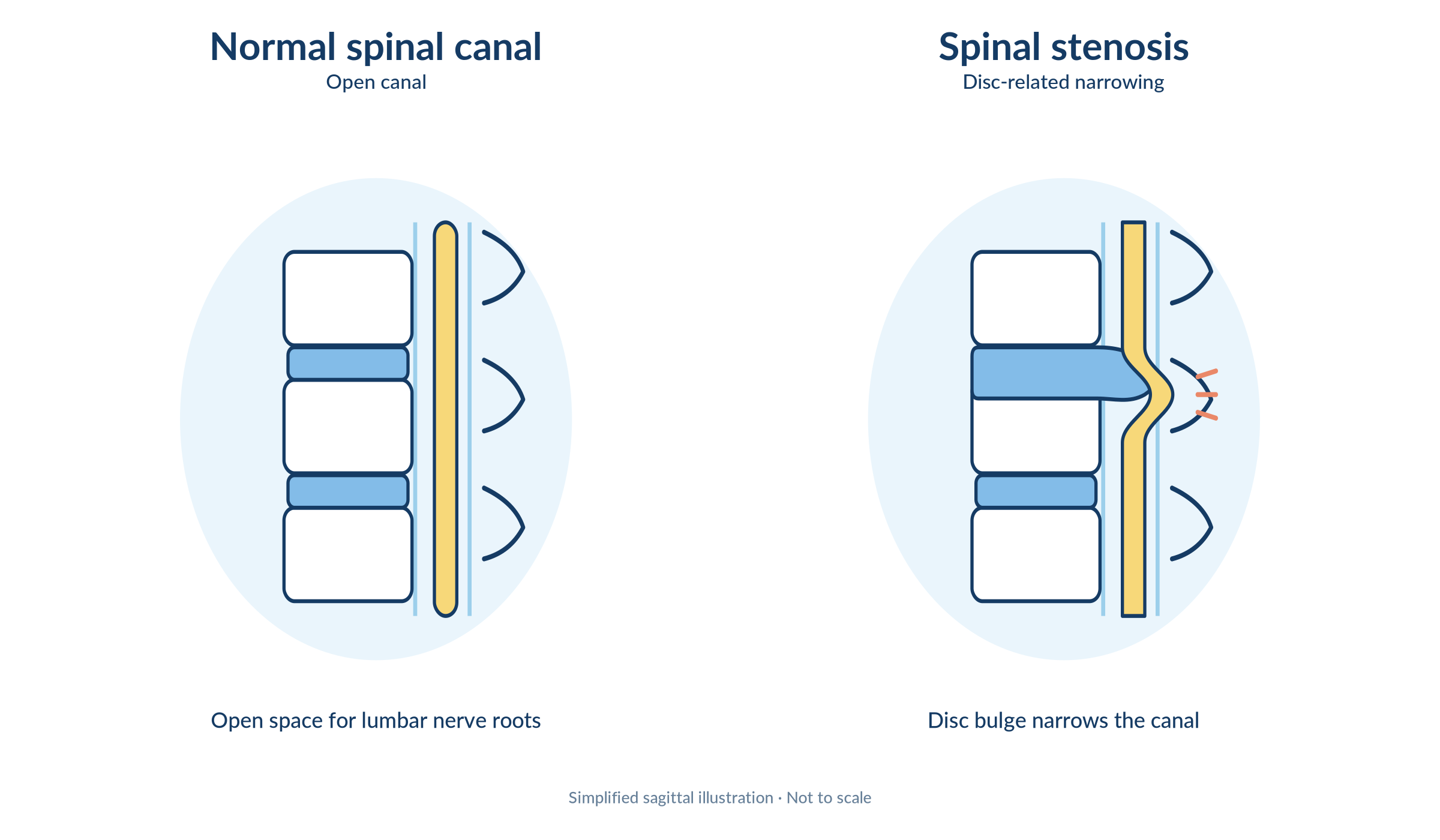
Lumbar spinal stenosis is a narrowing of the spaces within the lower spine where nerves travel. This narrowing can put pressure on the nerves that supply sensation and strength to your legs.
It often develops gradually as the discs, joints, and ligaments of the spine change over time. These changes can reduce the space available for the nerves, sometimes causing pain, numbness, tingling, or weakness.
One of the most recognizable patterns is discomfort that becomes worse with standing or walking and improves with sitting or leaning forward.
Not everyone with spinal narrowing on an MRI has symptoms. What matters is whether the findings help explain what you're experiencing.
UNDERSTANDING YOUR SYMPTOMS
Why does walking or standing make my legs hurt?
COMMON SIGNS
For many people with lumbar spinal stenosis, symptoms are most noticeable when they're upright and active.
Standing or walking can reduce the space available for the nerves in the lower spine, while sitting or bending forward may temporarily relieve pressure.
Common symptoms include:
Pain, aching, heaviness, or cramping in one or both legs
Numbness or tingling in the buttocks, thighs, calves, or feet
Leg weakness or fatigue when walking
Symptoms that worsen with standing or walking
Relief when sitting, resting, or leaning forward
Difficulty walking distances that used to feel comfortable
Sometimes, accompanying lower back pain
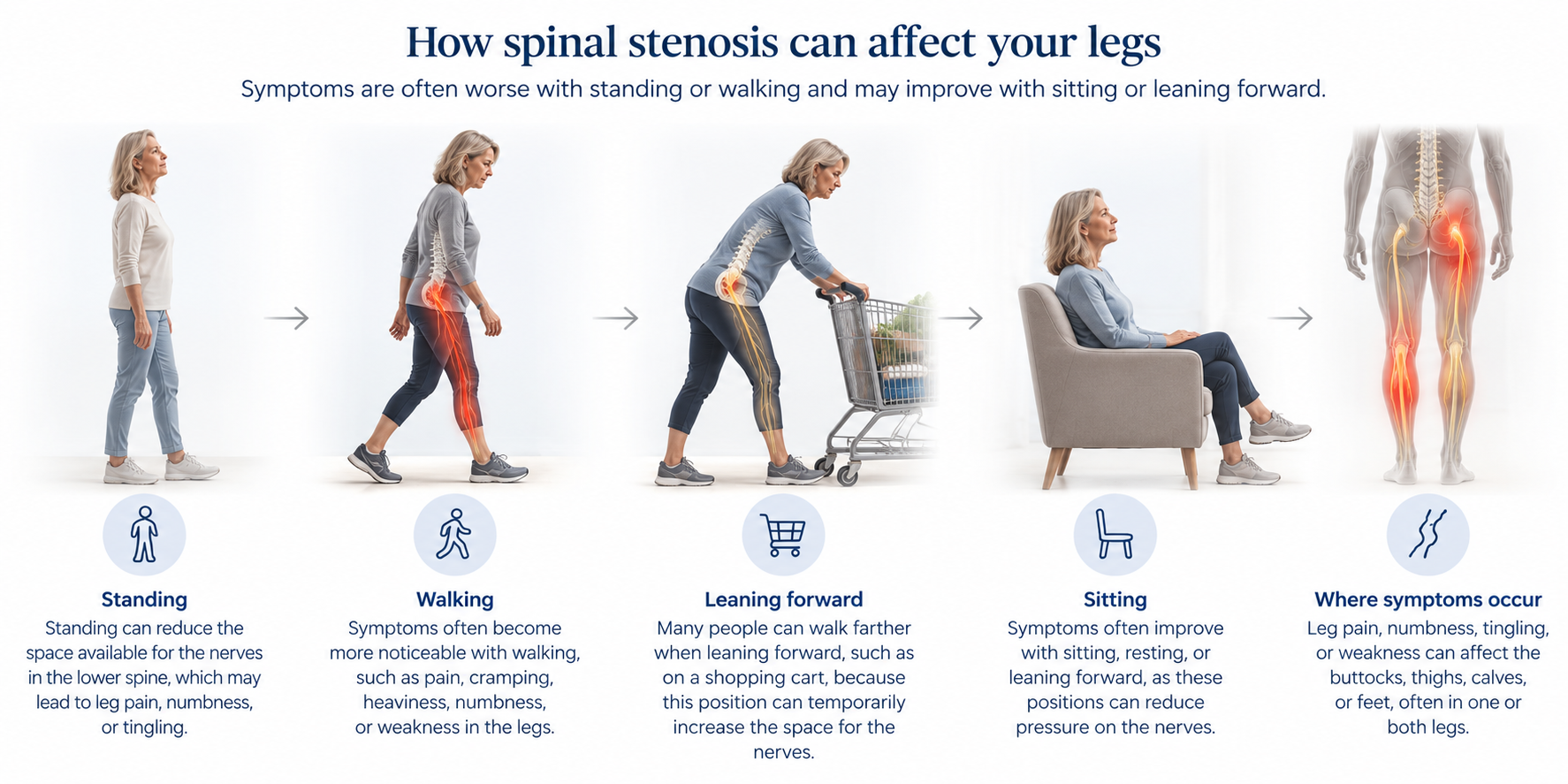
Some patients notice they can walk farther while leaning on a shopping cart or riding a stationary bicycle than when walking upright.
This pattern is called neurogenic claudication.
Not all leg pain or walking difficulty comes from the spine. Circulation problems, hip conditions, and other causes can produce similar symptoms, which is why a careful evaluation matters.
WHY IT HAPPENS
What causes spinal stenosis?
Lumbar spinal stenosis most commonly develops from age-related changes in the spine. Over time, several structures can contribute to narrowing around the nerves.
The small joints in the back of the spine, called facet joints, can enlarge or develop arthritic changes. Bone spurs may further reduce the space available for nearby nerves.

Arthritis and Bone Spurs
Ligaments that help stabilize the spine can thicken over time, contributing to narrowing of the spinal canal.

Thickened Ligaments
Disc Degeneration and Bulging
As spinal discs lose height or change shape, they may bulge into spaces where nerves travel. These changes can occur alongside arthritis and ligament thickening.

Other factors, including certain forms of spinal instability or a naturally narrow spinal canal, can also contribute.
The important question isn't simply how much narrowing appears on an MRI. It's whether that narrowing explains your symptoms and how much it's affecting your daily life.