LUMBAR HERNIATED DISC · GREATER BOSTON
Lumbar Herniated Disc
When back or leg pain interrupts your life, understanding the cause is the first step.
Being told you have a herniated disc can sound alarming, especially when you're dealing with persistent back pain, shooting pain down your leg, or numbness and weakness that interfere with everyday activities. But a herniated disc doesn't automatically mean you need surgery—or that your symptoms will be permanent.
Many people improve with time and non-operative treatment. For others, targeted injections or surgery may offer relief when symptoms persist or nerves are significantly affected.
The most important first step is understanding whether the herniated disc is actually responsible for your symptoms, how it's affecting your nerves, and which treatment options make sense for you.
What is a lumbar herniated disc?
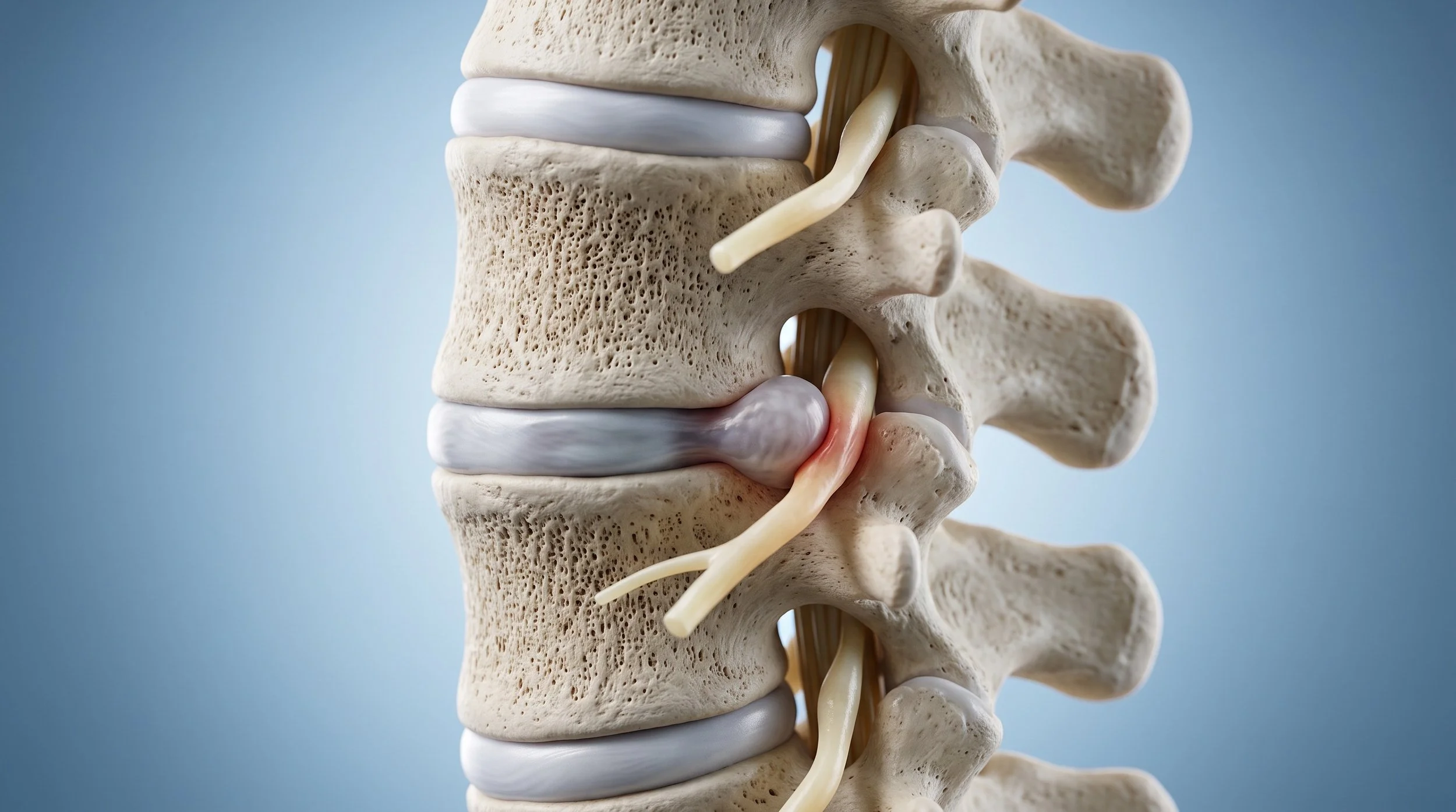
The discs between the vertebrae of your spine act as cushions and help your back move comfortably. Each disc has a softer center surrounded by a tougher outer layer.
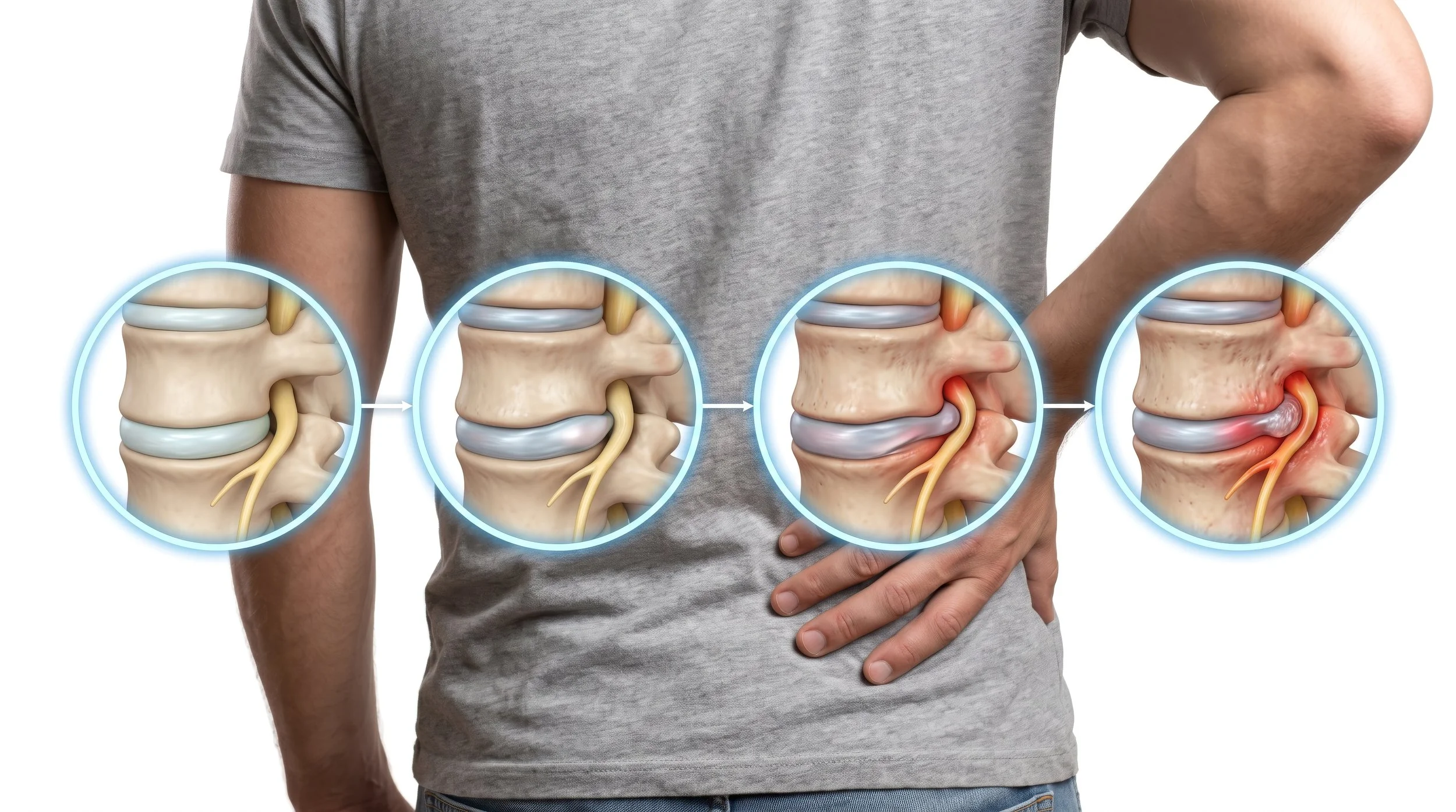
A lumbar disc herniation occurs when some of the inner disc material pushes through a weakened or torn portion of that outer layer.
If the herniated material irritates or compresses a nearby nerve, it can cause pain, tingling, numbness, or weakness that travels into the buttock or leg. This is one common cause of sciatica.
Importantly, a herniated disc seen on an MRI doesn't always cause symptoms. Treatment decisions should be based on how you're feeling, your physical examination, and your imaging—not the MRI alone.
UNDERSTANDING YOUR CONDITION
COMMON SIGNS
What does a herniated disc feel like?
Lower back pain
Pain radiating to the buttock, thigh, or leg (sciatica)
Numbness or tingling
Muscle weakness
Symptoms that worsen with sitting, standing, or certain movements
TREATMENT OPTIONS
How can we help?
At every step, the goal is to relieve your symptoms, improve function, and help you get back to the activities you enjoy. Treatment is always individualized.
Physical therapy, activity modification, pain management, and targeted injections can be highly effective, especially in the early stages.
Non-Operative Care
Spinal Injections
Epidural steroid injections can reduce inflammation and provide significant pain relief, often allowing you to return to daily activities.

For persistent pain, progressive nerve symptoms, or significant functional limitations, endoscopic or minimally invasive surgery may be appropriate.